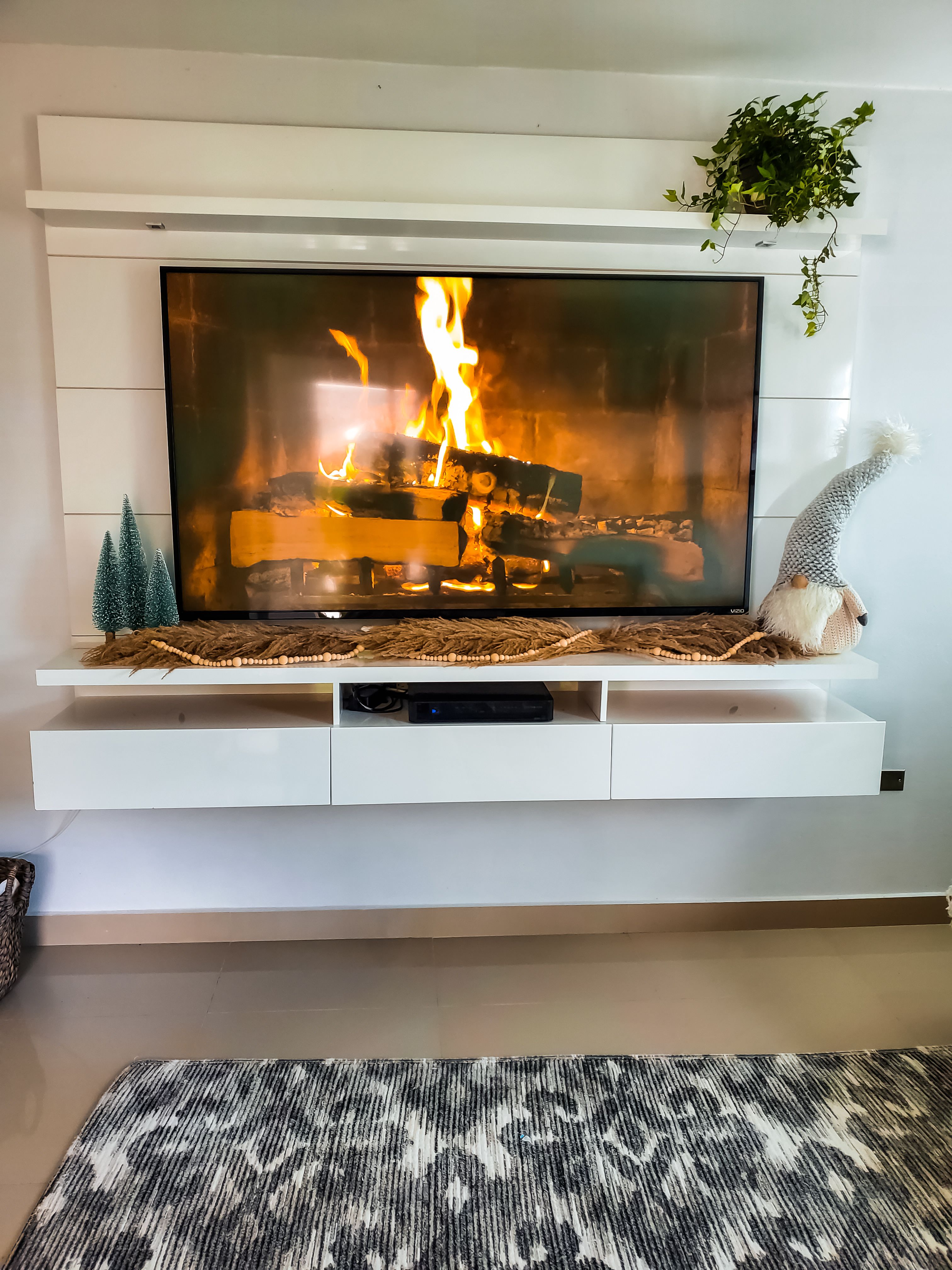
My family has a little tradition in the winter. We pull up a fireplace channel on the Roku, turn the lights down low, and let it run for hours — flickering flames, the soft crackle of a fire that isn’t actually there. It’s convenient. No wood to split, no ash to clean, no risk of a spark landing where it shouldn’t. Just push a button and the room feels warm.
Except it doesn’t. Not really. I’ve sat in front of that screen plenty of times still reaching for a blanket, because a picture of fire was never going to warm anything. It got me thinking about the church, and what fire is actually supposed to represent.
Paul saw this coming long before screens made it easy. Writing to Timothy about the last days, he doesn’t describe outsiders — he describes insiders, people with the vocabulary, the posture, the appearance of the faith, “having a form of godliness, but denying the power thereof” (2 Tim. 3:5). The word for “form” there is morphosis — a mold, an outward shape. That’s what makes a Roku fireplace convincing too: it’s built to the exact look of the real thing. Paul says the same thing to Titus about people who “profess that they know God; but in works they deny him” (Titus 1:16). The shape was right. The substance wasn’t there.
Nobody sets out to trade a real fire for a fake one. They just get tired of what a real fire demands — the work, the mess, the risk. A remote is easier. So is a form of godliness. It’s attendance without repentance, vocabulary without obedience, a testimony with nothing behind it. It costs nothing, which is exactly the problem — real fire always costs something.
Paul doesn’t leave us with a diagnosis and no cure. Elsewhere he describes what the real thing looks like: “Let love be without dissimulation… fervent in spirit; serving the Lord” (Rom. 12:9, 11). “Dissimulation” is the actor’s mask — love with nothing hidden behind it. “Fervent” comes from a word that means to boil, to be hot to the touch. That’s not a decorative word. That’s a temperature. Paul is describing a love that produces actual heat, whether or not anyone’s close enough to feel it.
Paul’s instruction to Timothy isn’t “repair the form.” It’s “from such turn away” (2 Tim. 3:5). You don’t fix a fake fireplace. You walk past it and build a real one.
So the question isn’t whether your walk with the Lord looks warm from across the room. It’s whether anyone who’s gotten close to you has actually gotten warm. A Roku fireplace never burns a house down. It also never kept anyone alive in a storm.


Leave a Reply